
Why hiring and culture conversations miss the deeper issue: brokerage development systems are too fragile, too person-dependent, and too slow to scale.
Your senior CSR closed her laptop late again last Thursday. Not because of a complicated claim. Because she had spent another two hours that week walking a newer hire through the same coverage nuance she had explained the week before. And the week before that.
Or the dedicated trainer down the hall, running the same module for the sixteenth time this year, with no durable footprint left for the next branch to reuse.
That is not a hiring problem.
That is not a culture problem.
That is the brokerage's development system showing its seams.
The Talent Conversation Is Real
Hiring pressure is real. Retention pressure is real. The need to develop people faster and more consistently is real. Most Canadian brokerages already know this.
The conversation about talent is everywhere. The conversation about the systems that actually develop talent is still too thin.
In many brokerages, the standard exists. The know-how exists. The intent exists. What is missing is a structured way to turn all three into something repeatable across desks, branches, and tenure stages.
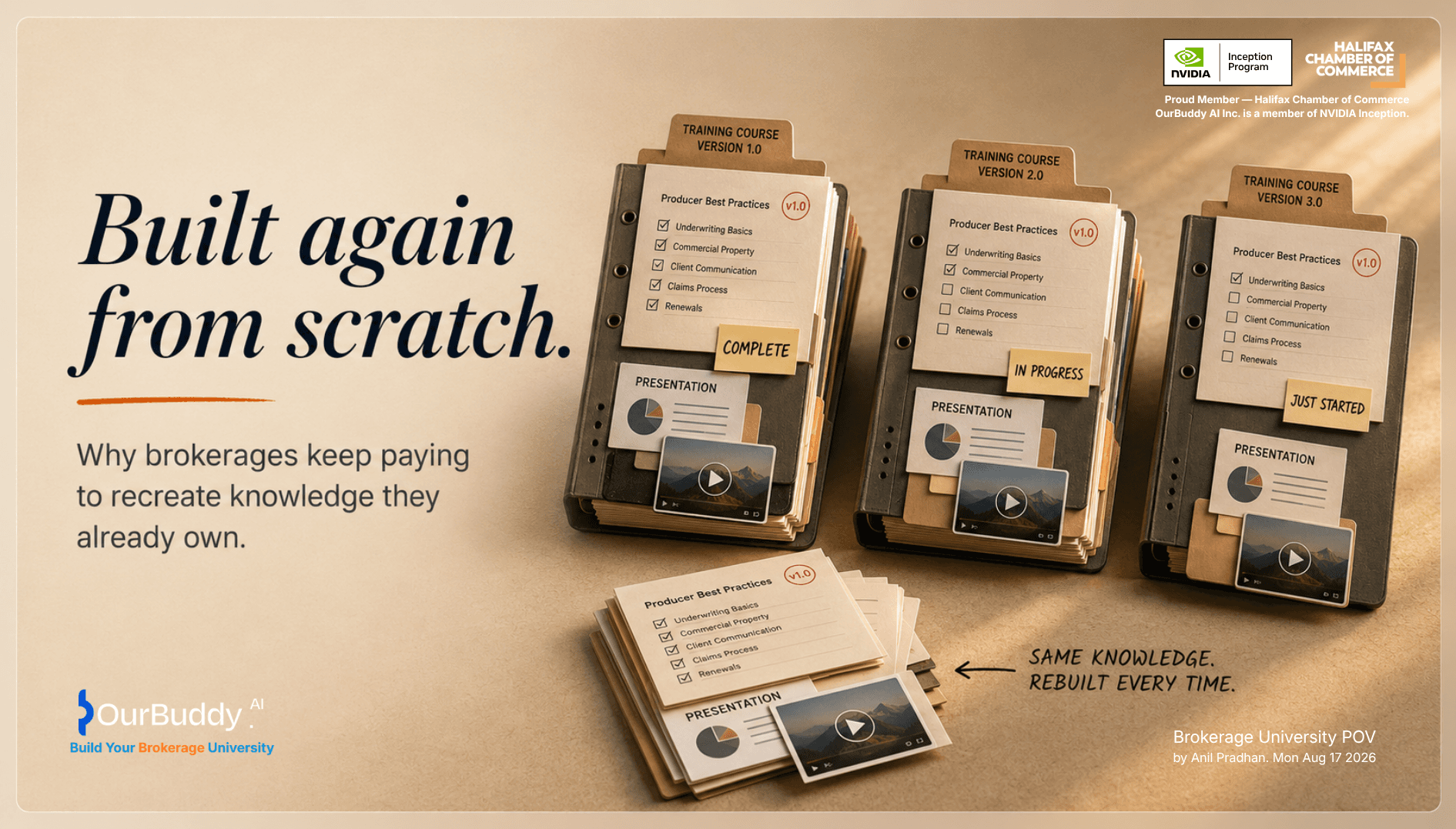
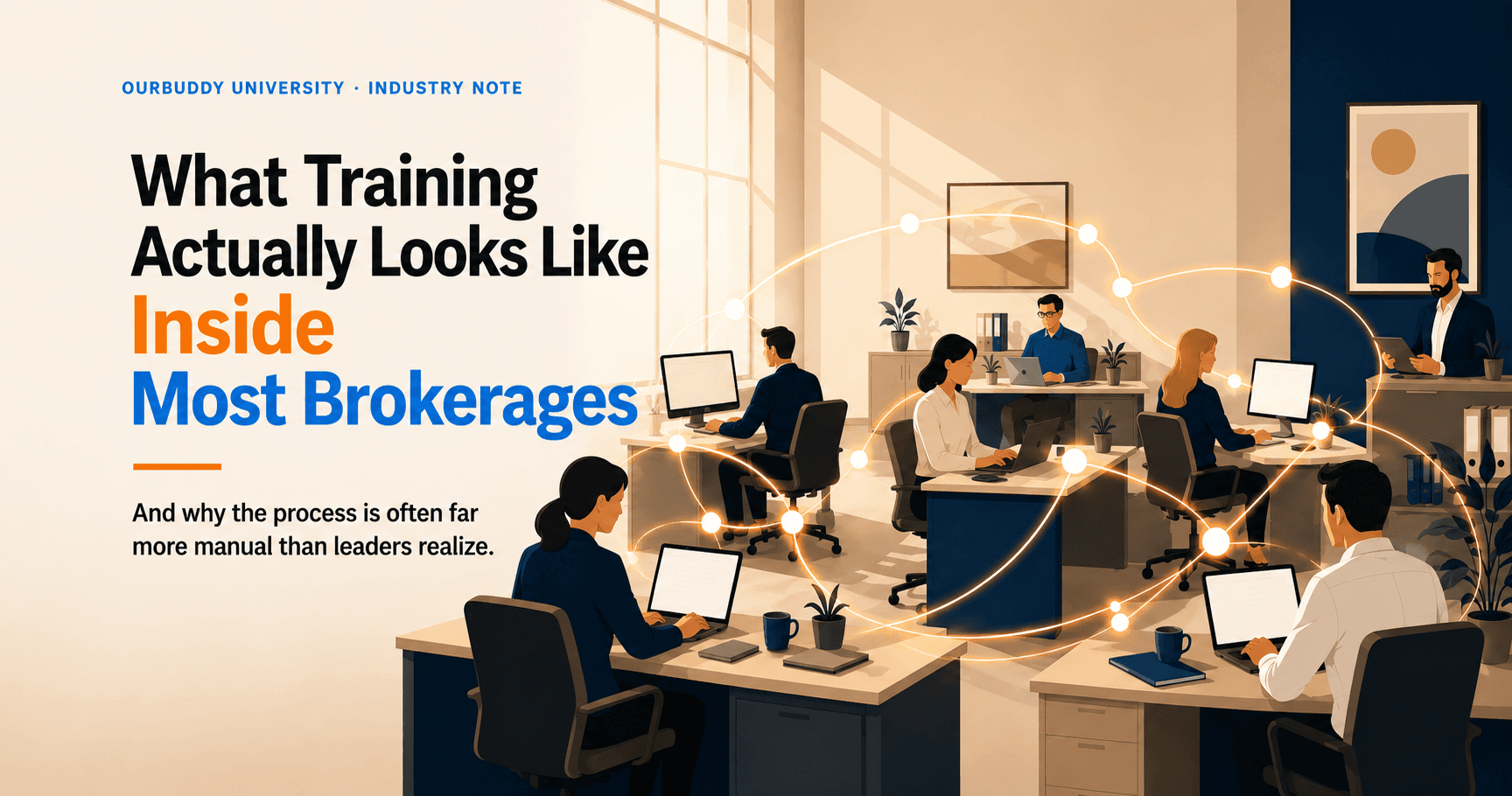
Right now, that work runs through a patchwork of shadowing, scattered files, office habits, and repeated explanations from the same handful of strong people. Useful material already exists. SOPs, checklists, PDFs, recorded sessions, internal expertise. The bottleneck is not the lack of content. It is the time and effort required to turn that content into something assignable, trackable, and consistent.
What the Breakdown Actually Looks Like
A new hire's experience varies by which branch they sit in, who trains them that week, and how busy the team is. The standard exists, but the delivery of that standard does not travel consistently.
The downstream effects compound quietly. New employees feel less supported than leadership assumes. Development quality varies across desks and branches. Senior employees and dedicated trainers carry a repetition burden. Leadership sees readiness gaps too late. Institutional knowledge stays vulnerable when experienced people leave.
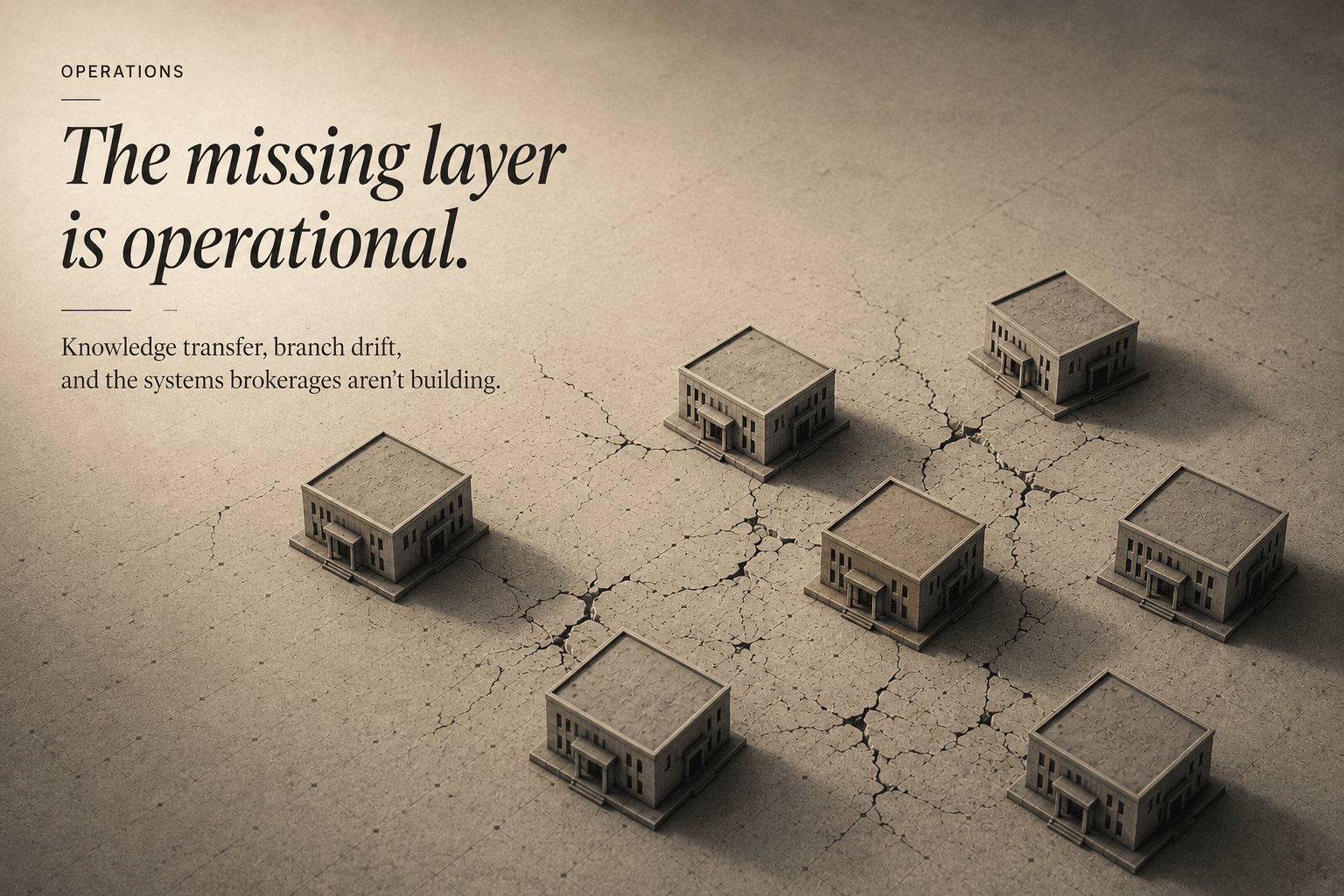
In a consolidating market, the pressure compounds further. As brokerages acquire, merge, and grow across geographies, preserving standards across legacy teams and local habits becomes the harder problem. Without a deliberate internal system, consolidation makes inconsistency harder to see and harder to fix.
Weak development systems do more than slow ramp. They quietly increase disengagement, repetition, and frustration across both new and experienced teams.
Why This Is an Operating Problem
Weak talent development does not stay confined to HR. It shows up in operations. In slower time-to-competence. In inconsistent execution. In repeated mistakes. In uneven service quality. In avoidable branch drift. In managers spending more time checking, correcting, and compensating than they should need to.
If development is inconsistent, execution will be inconsistent.
That is why talent nurturing belongs in the operating conversation, not only the people conversation.
A More Practical Response
The idea of a brokerage-specific internal university is not a branding exercise and not a cosmetic training portal. It is a practical internal system for how the brokerage develops people at scale.
Done well, it captures internal standards and know-how before they sit only in people's heads. It turns existing SME knowledge into structured learning faster. It supports clearer new-hire ramp. It reduces repeat interruptions on the senior CSRs and dedicated trainers the system currently runs through. For brokerages with a dedicated training function, it shifts the trainer's time from delivering the same module repeatedly to designing, refining, and measuring readiness. It builds consistency across teams, functions, and locations. It gives leadership earlier visibility into readiness, progress, and gaps.
That is different from simply having training. It is institutionalizing how the business grows capability.
The Shift Ahead
The brokerages that navigate this era best will not only be the ones that care about people. Most already do. The ones that pull ahead will be the ones that make development more structured, more visible, and more repeatable.
Because as a brokerage grows, talent nurturing cannot remain a side activity carried by a few individuals. It has to become part of how the business runs.
The Question Worth Asking
If a strong CSR, producer, or dedicated trainer left your brokerage next month, how much of what they know is captured in a way the rest of the team could actually use?
If the honest
answer feels uncomfortable, that is the operational layer this article is
about.
Acknowledgment: Thanks to Tom Reid, President of GRTR Consulting and host of IBAC Tech Trek, for the structural sharpening that shaped this version, particularly the opening framing.
Last updated: 2026-05-25. sharpened post-publication based on peer-reviewer feedback
Author bio: Anil Pradhan is a Halifax-based P&C broker turned training and operations leader, and co-founder of OurBuddy.ai. He works with Canadian brokerages on building internal “Brokerage University” systems to improve role readiness, consistency, and knowledge transfer across teams and locations.